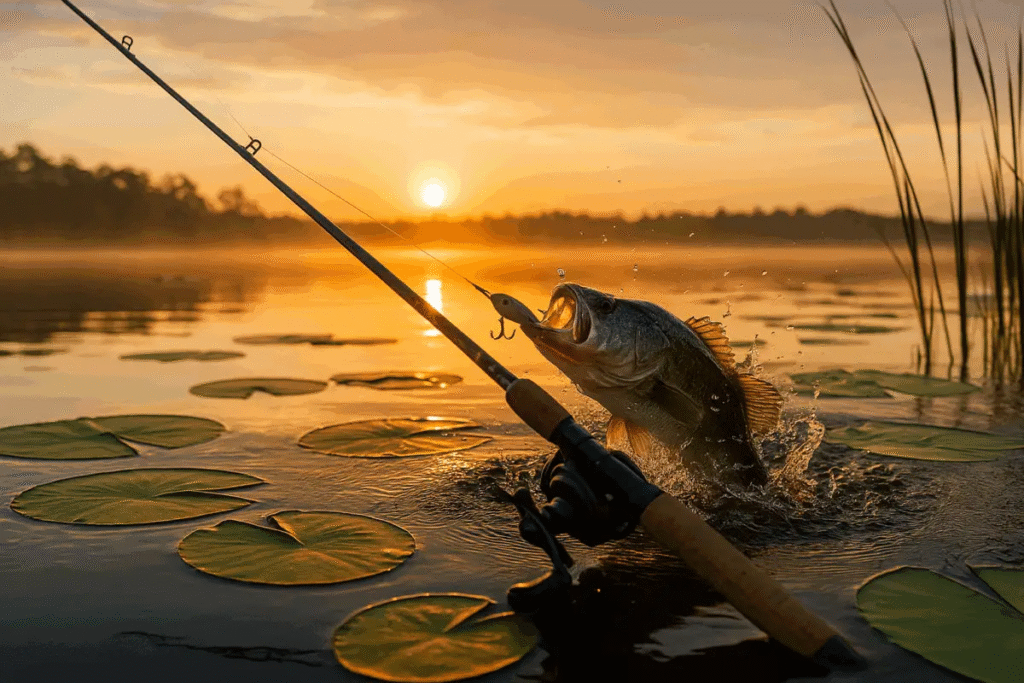
Topwater Fishing Secrets: Topwater fishing is one of the most exciting techniques in the world of angling. Few moments compare to the adrenaline rush of seeing a fish explode through the water’s surface to crush your lure. Whether you’re targeting largemouth bass, smallmouth bass, or other aggressive predators, mastering topwater fishing can dramatically increase your success on the water.
In this comprehensive guide from the fishing experts at Cheerfulfisherman.com, we dive deep into the exciting world of topwater fishing and reveal some of the most effective secrets used by experienced anglers. You will learn the best times of day to fish, the types of weather conditions that increase your chances of success, and the specific locations where surface predators are most likely to strike.
We will also cover proven techniques for working topwater lures, selecting the right gear, and understanding fish behavior when they feed near the surface. From calm early mornings to explosive evening bites, mastering these strategies can dramatically increase your success on the water.
If you want to transform your fishing trips and experience the thrill of heart-pounding surface attacks, this guide will give you the practical knowledge, confidence, and tactics needed to trigger aggressive strikes and land more fish on your next adventure.
Why Topwater Fishing Is So Effective
Topwater fishing works because it taps into a predator’s natural instinct to attack vulnerable prey on the surface. Many baitfish, frogs, insects, and small animals create disturbance on the water’s surface, making them easy targets.
Predatory fish often see these movements as an opportunity for an easy meal.
Topwater lures mimic:
- Injured baitfish
- Frogs or rodents
- Struggling insects
- Panicked prey
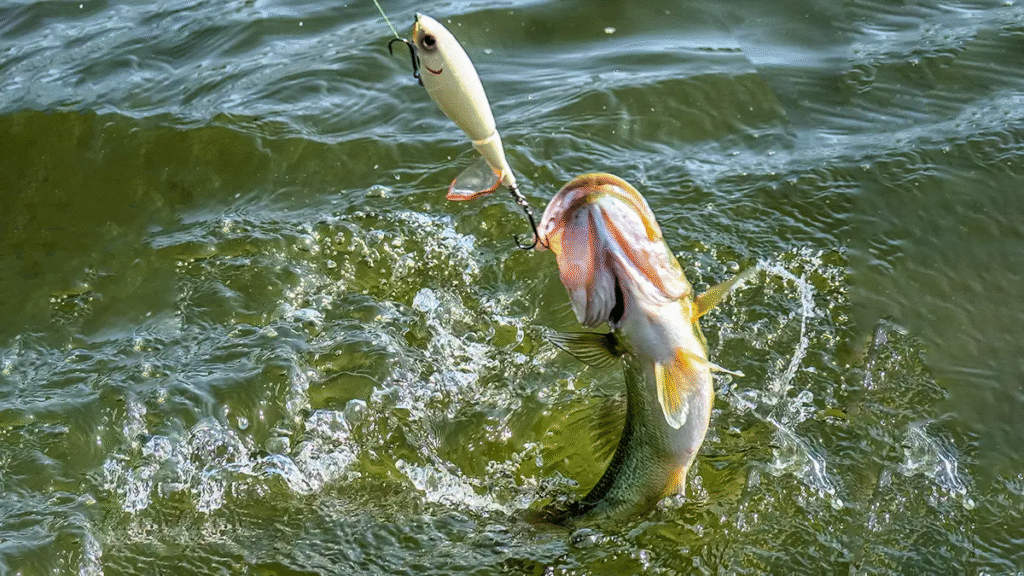
When a fish strikes a surface lure, the result is often an explosive attack that anglers never forget.
Besides excitement, topwater fishing offers several advantages:
- Visual strikes make fishing more engaging
- Works well in shallow water
- Reduces snagging compared to subsurface lures
- Can trigger aggressive reaction bites
However, success with topwater fishing depends heavily on timing, location, and technique.
When to Use Topwater Lures
One of the biggest secrets to successful topwater fishing is understanding when fish are most willing to strike the surface.
Early Morning: The Golden Hour
The early morning hours are widely considered the best time for topwater fishing.
At sunrise:
- Water temperatures are cooler
- Fish are actively feeding
- Low light conditions make predators more confident
Bass and other species move into shallow areas to hunt baitfish and insects near the surface.
During this time, topwater lures can produce some of the most aggressive strikes of the day.
Late Evening: Another Prime Window
Just before sunset, fish become active again after the heat of the day.
Evening topwater fishing works well because:
- Surface temperatures drop
- Baitfish move shallow
- Light levels decrease
This is another period where predators feel safe attacking near the surface.
Overcast Days
Cloud cover can extend the topwater bite throughout the day.
When skies are cloudy:
- Fish roam more freely
- They are less cautious
- Surface feeding activity increases
On heavily overcast days, topwater lures may work all day long.
During the Spawn and Post-Spawn
In spring, bass often become aggressive around nests and shallow areas.
Topwater fishing during this period can be extremely productive because fish:
- Defend their territory
- Attack intruders aggressively
- Stay in shallow water
Using topwater lures near spawning areas can provoke violent reaction strikes.
Where to Fish Topwater Lures
Location plays a crucial role in topwater success. Fish rarely strike randomly; they attack from places where they can ambush prey.
Understanding these locations will significantly increase your catch rate.
Around Vegetation
Vegetation provides shelter and ambush points for predator fish.
Look for:
- Lily pads
- Hydrilla
- Grass beds
- Reeds
- Weed edges
These areas attract baitfish and frogs, making them prime topwater zones.
Weedless topwater lures work especially well here because they can glide across thick cover without snagging.
Near Structure
Structure creates natural ambush points.
Fish often wait near objects such as:
- Fallen trees
- Dock pilings
- Rocks
- Bridge supports
- Stumps
Casting topwater lures near these structures can trigger sudden attacks from hidden fish.
Shallow Flats
Shallow flats are excellent feeding grounds, especially early in the morning.
Predators move onto flats to chase baitfish trapped in shallow water.
These areas are perfect for covering water with topwater lures.
Points and Drop-offs
Points and drop-offs act as transition zones where fish move between deep and shallow water.
Fish often patrol these areas looking for prey.
Topwater lures worked along these edges can be extremely effective.
How to Trigger Explosive Topwater Strikes
Knowing where and when to fish is only part of the equation. The way you retrieve your lure can make the difference between getting ignored and triggering a violent strike.
The Walk-the-Dog Technique
One of the most effective topwater techniques is the famous walk-the-dog retrieve.
This technique involves twitching the rod tip to make the lure zigzag across the surface.
The erratic movement mimics a wounded baitfish struggling on the surface.
Key tips:
- Use short rod twitches
- Maintain slight slack in the line
- Keep a steady rhythm
This technique is deadly for species like largemouth bass and striped bass.
The Pop-and-Pause Method
Popping lures create noise and splash that attract fish from a distance.
The technique is simple:
- Pop the lure sharply
- Let it sit motionless
- Repeat
Often, fish strike during the pause when the lure appears vulnerable.
The Steady Retrieve
Some topwater lures perform best with a simple steady retrieve.
Buzzbaits and propeller lures create surface commotion as they move.
The constant noise and vibration attract fish from long distances.
This technique is especially effective in murky water or windy conditions.
Choosing the Right Topwater Lure
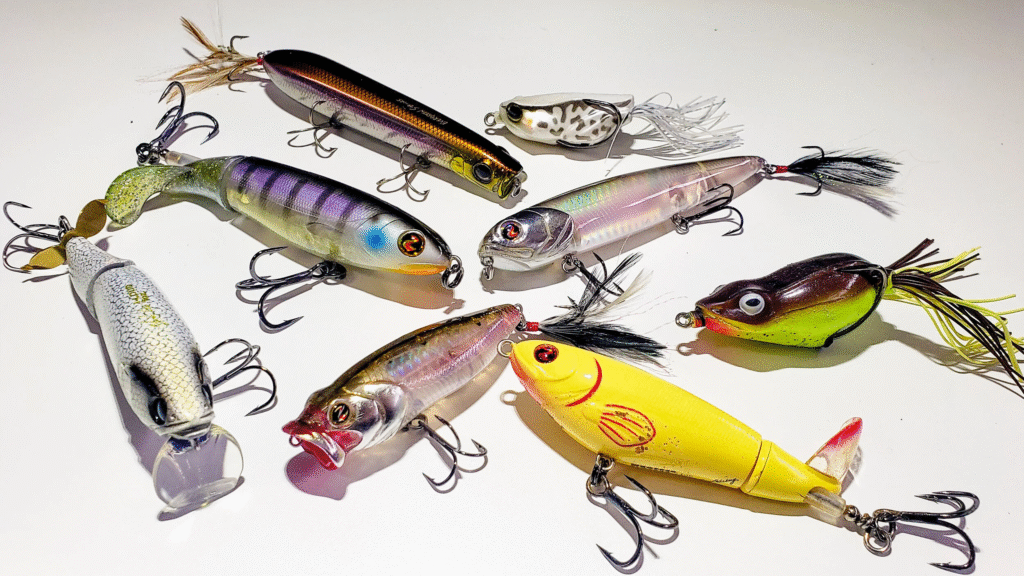
Not all topwater lures are the same. Different designs create different actions and sounds.
Here are some of the most effective categories.
Poppers
Poppers create a distinctive popping sound and splash.
They are perfect for:
- Calm water
- Fishing near cover
- Targeting suspended fish
The splash imitates a struggling baitfish or insect.
Walking Baits
Walking baits glide from side to side across the surface.
They mimic injured baitfish and are extremely effective in open water.
These lures are ideal for covering larger areas.
Frogs
Frog lures are excellent for fishing over thick vegetation.
They imitate frogs moving across lily pads and weed mats.
Because they are weedless, they allow anglers to fish in places other lures cannot reach.
Buzzbaits
Buzzbaits create a loud buzzing sound on the surface.
They are ideal for:
- Low light conditions
- Windy days
- Murky water
Their aggressive action often triggers reaction strikes.
Gear Setup for Topwater Fishing
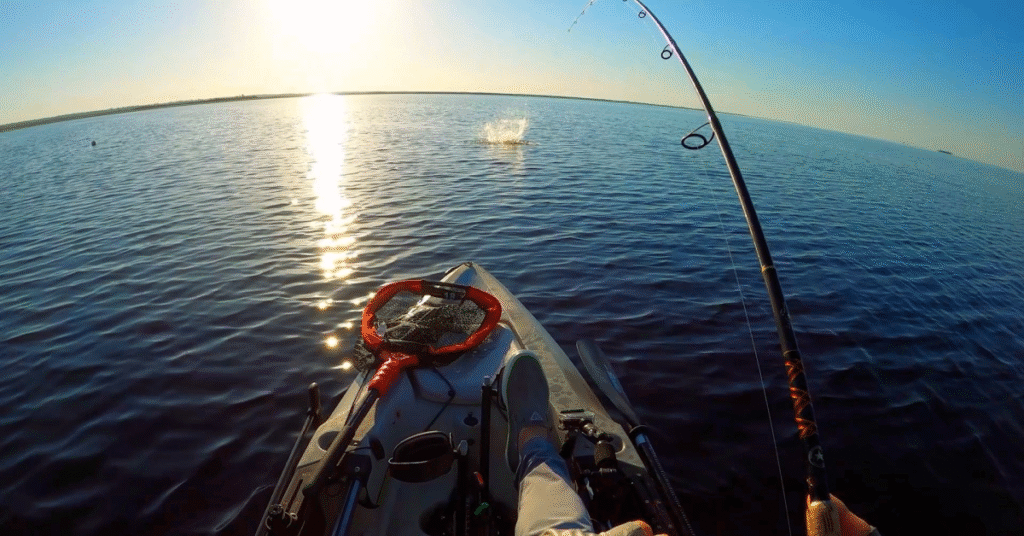
Using the right gear improves casting accuracy and hook-up ratios.
Rod
A medium-heavy rod with a fast tip provides good control for working topwater lures.
Reel
A high-speed reel helps pick up slack line quickly during retrieves.
Line
Many anglers prefer braided line because:
- It floats
- It provides solid hooksets
- It has excellent sensitivity
However, monofilament also works well since it floats naturally.
The Biggest Topwater Fishing Mistake
One of the most common mistakes anglers make is setting the hook too early.
When a fish explodes on your lure, the instinct is to immediately jerk the rod.
But often the fish hasn’t fully taken the lure yet.
The best strategy:
- Wait until you feel the weight of the fish
- Then set the hook firmly
This simple adjustment can dramatically increase your landing ratio.
Final Thoughts: Mastering the Art of Topwater Fishing
Topwater fishing is one of the most thrilling techniques in angling. Watching a fish explode through the surface to attack your lure is an unforgettable experience.
By understanding:
- When to fish topwater
- Where predators hide
- How to retrieve your lure correctly
you can dramatically increase your chances of triggering those explosive strikes.
The key is patience, observation, and experimentation. Different conditions require different approaches, so keep trying new techniques until you find what works best.
With practice, you’ll soon discover why so many anglers consider topwater fishing the most exciting style of fishing in the world.