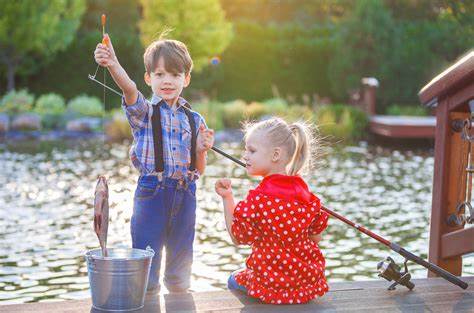
The Ultimate Kayak Fishing Guide: Kayak fishing has exploded in popularity over the last decade, and for good reason. It combines the stealth and simplicity of kayaking with the thrill of fishing, allowing anglers to reach waters that traditional boats simply can’t. From shallow flats and winding rivers to offshore reefs and large lakes, kayak fishing opens up a whole new world of opportunities.
Whether you’re a complete beginner or an experienced angler looking to refine your setup, this ultimate kayak fishing guide will walk you through everything you need to know. We’ll cover kayak selection, setup, essential accessories, fishing techniques, and critical safety tips, all in one comprehensive resource.
By the end of this in-depth guide crafted by the seasoned experts at CheerfulFisherman.com, you’ll gain the practical knowledge, hands-on tips, and confidence needed to build the perfect kayak fishing setup. From choosing essential accessories to understanding safety best practices, this resource will help you fish more comfortably, efficiently, and safely while maximizing your enjoyment and success on the water.

What Is Kayak Fishing?
Kayak fishing is exactly what it sounds like: fishing from a kayak instead of a traditional boat or from shore. However, modern kayak fishing has evolved far beyond simply casting a line from a basic kayak.
Today’s fishing kayaks are designed with stability, storage, comfort, and customization in mind. Many models include features like rod holders, pedal-drive systems, standing platforms, fish finder mounts, and even electric motors.
Kayak fishing appeals to anglers who want:
- Affordable access to fishing spots
- A quiet, stealthy approach
- A physically engaging outdoor experience
- The freedom to fish alone or with minimal gear
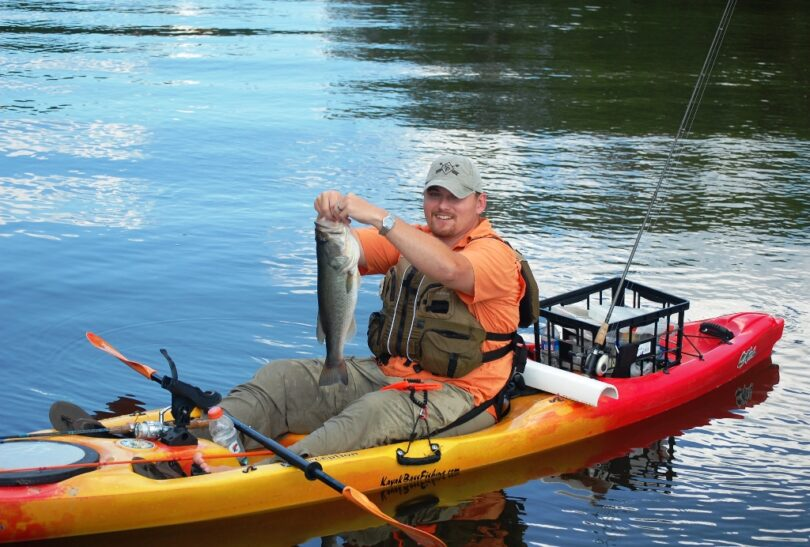
Why Kayak Fishing Is So Popular
The rise of kayak fishing isn’t a coincidence. Several factors have contributed to its massive growth:
Affordability
Compared to boats, kayaks are far more budget-friendly. There’s no fuel, no insurance in many areas, and minimal maintenance costs.
Accessibility
Kayaks can be launched from beaches, riverbanks, small ramps, or even roadside pull-offs. You don’t need a marina or trailer.
Stealth
Kayaks are nearly silent on the water, which is a huge advantage when targeting wary fish in shallow water.
Fitness and Lifestyle
Kayak fishing offers a great workout while allowing anglers to connect deeply with nature.
Versatility
From bass fishing on small ponds to chasing redfish in the flats or even offshore species, kayaks can do it all.
Types of Kayaks for Fishing
Choosing the right kayak starts with understanding the different types available.
Sit-On-Top Kayaks
These are the most popular choice for kayak fishing.
Pros:
- Extremely stable
- Easy to get on and off
- Self-draining scupper holes
- Ideal for warm climates and saltwater
Cons:
- Heavier than sit-inside kayaks
- Less protection from cold water
Sit-Inside Kayaks
More traditional kayak design, often used in rivers and lakes.
Pros:
- Lightweight
- Better protection from wind and cold
- Efficient paddling
Cons:
- Less stable for standing
- Limited storage
- Harder to re-enter if flipped
Pedal-Drive Kayaks
These kayaks use foot-powered propeller or fin systems.
Pros:
- Hands-free fishing
- Efficient movement
- Excellent for covering long distances
Cons:
- Expensive
- Heavier
- More maintenance
Motorized Kayaks
Electric motors are becoming increasingly popular.
Pros:
- Effortless travel
- Ideal for long trips
- Great for windy conditions
Cons:
- Added cost
- Battery management required
- Regulations vary by location
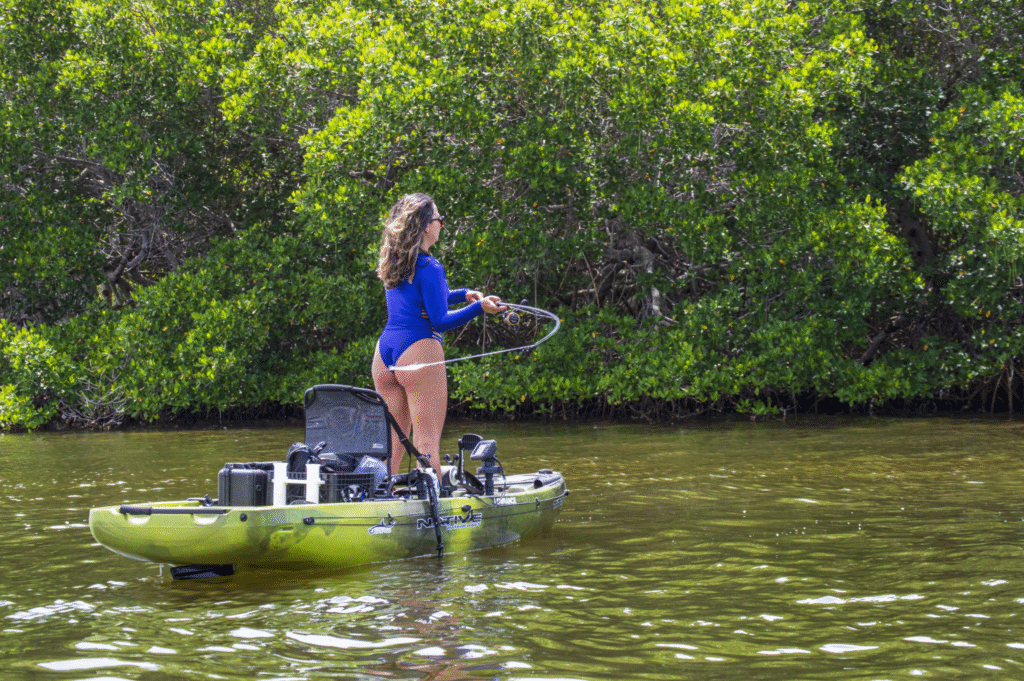
Choosing the Right Kayak for Your Fishing Style
Not all kayak fishing is the same. Your ideal kayak depends on where and how you fish.
Freshwater Bass Fishing
Look for:
- Wide, stable hull
- Standing platform
- Multiple rod holders
- Space for electronics
Inshore Saltwater Fishing
Look for:
- Corrosion-resistant hardware
- Good tracking in wind
- Ample storage for tackle
- Anchor trolley system
Offshore Kayak Fishing
Look for:
- Long, narrow hull for speed
- Pedal or motor drive
- High weight capacity
- Safety features like rudder and visibility flags
Kayak Fishing Setup: Step-by-Step
Setting up your kayak properly is crucial for efficiency and safety.
Step 1: Position Your Seat
A comfortable seat with good back support reduces fatigue. Adjust it to maintain proper posture and balance.
Step 2: Install Rod Holders
Rod holders can be flush-mounted, adjustable, or track-mounted. Place them where you can easily reach without twisting.
Step 3: Add Gear Tracks
Gear tracks allow you to customize your kayak without drilling holes. They’re perfect for mounting accessories.
Step 4: Balance the Load
Distribute weight evenly. A poorly balanced kayak is harder to paddle and less stable.

Essential Kayak Fishing Accessories
Accessories turn a basic kayak into a fishing machine.
Must-Have Accessories
- Paddle leash
- Rod leashes
- Anchor trolley
- Dry bags
- Landing net
- Fish grips
- Measuring board
Nice-to-Have Accessories
- Crate system
- Camera mount
- LED lights
- Cup holder
- Visibility flag
Rods, Reels, and Tackle for Kayak Fishing
Kayak fishing gear should be compact and versatile.
Rod Length
Shorter rods (6’–7’) are easier to manage in tight spaces.
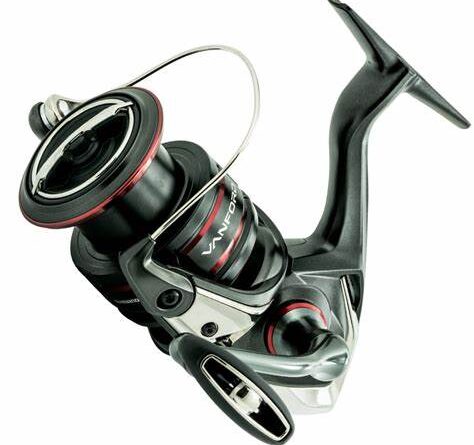
Reel Selection
- Spinning reels for versatility
- Baitcasting reels for accuracy
- Corrosion-resistant reels for saltwater
Tackle Management
Use waterproof tackle boxes and limit yourself to essentials to avoid clutter.
Kayak Fishing Electronics and Technology
Modern kayak anglers rely heavily on electronics.
Fish Finders
Compact fish finders with GPS are ideal for kayaks. Side imaging is helpful but not essential.
Transducer Mounting Options
- Scupper hole mount
- Arm mount
- In-hull mount
GPS and Mapping
Mark waypoints, track routes, and improve safety.
Anchoring and Positioning Systems
Staying in position is critical when fishing from a kayak.
Anchor Trolley System
Allows you to anchor from bow or stern depending on wind and current.
Types of Anchors
- Grapnel anchors
- Stake-out poles
- Drift chutes
Storage Solutions and Organization
Organization equals efficiency.
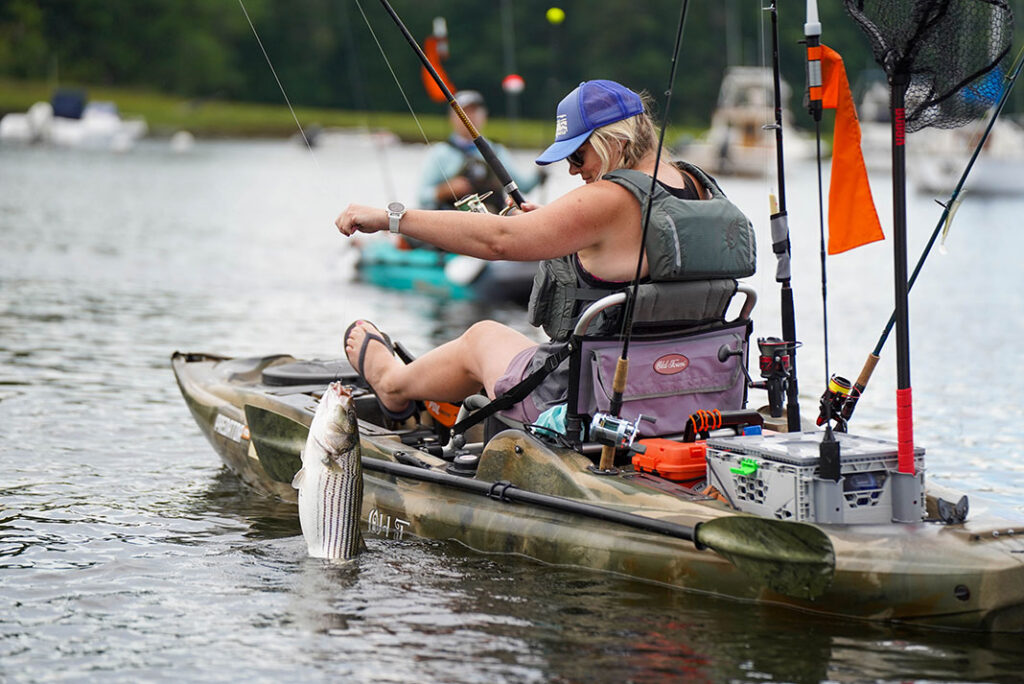
Crate Systems
Milk crates or custom kayak crates hold rods, tackle, and tools.
On-Deck Storage
Use bungee cords and dry hatches wisely.
Clothing and Comfort for Long Days on the Water
Comfort directly affects performance.
Clothing Tips
- Quick-dry materials
- Sun-protective clothing
- Waterproof footwear
Cold Weather Gear
- Dry suits
- Neoprene gloves
- Thermal layers
Kayak Fishing Safety Basics
Safety should always come first.
Key Safety Rules
- Always wear a PFD
- File a float plan
- Carry a whistle or horn
- Know self-rescue techniques
Personal Flotation Devices (PFDs)
Not all PFDs are kayak-friendly.
Best PFD Features
- High-back design
- Multiple pockets
- Lightweight material
Weather, Tides, and Water Conditions
Understanding conditions can save your life.
Weather Awareness
Check forecasts and watch for sudden changes.
Tides and Currents
Learn how tides affect fish behavior and kayak control.
Kayak Fishing Techniques by Environment
Each environment requires different strategies.
Rivers
Use current breaks and eddies.
Lakes
Target structure and drop-offs.
Coastal Waters
Focus on flats, mangroves, and channels.
Freshwater Kayak Fishing Tips
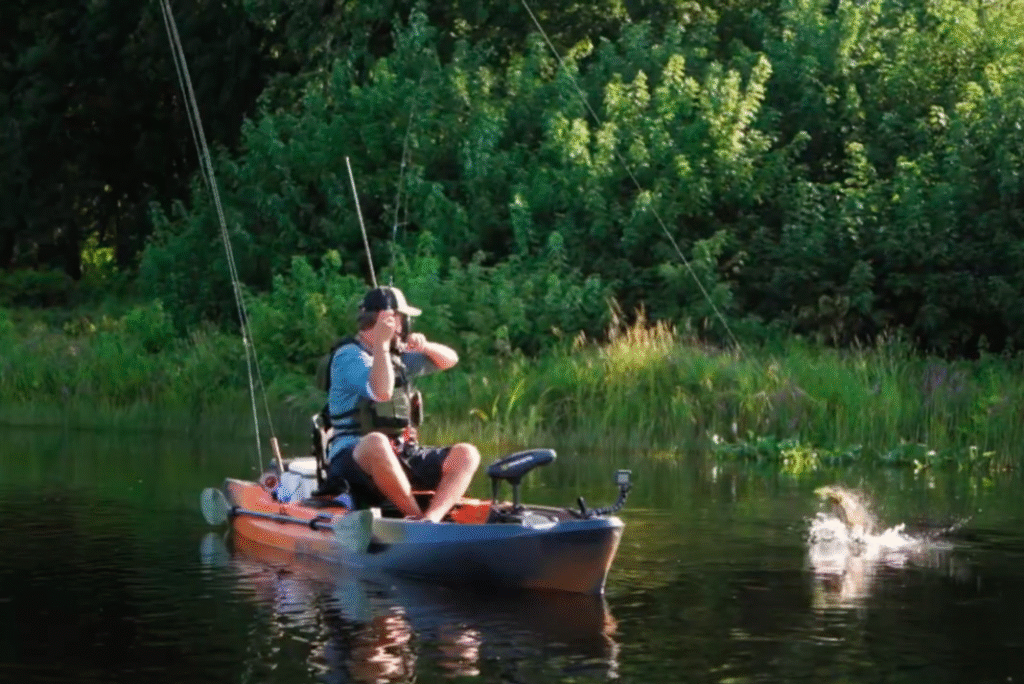
Freshwater kayak fishing is ideal for beginners.
Popular Species
- Bass
- Crappie
- Pike
- Trout
Techniques
- Casting along shorelines
- Vertical jigging
- Slow trolling
Saltwater and Inshore Kayak Fishing Tips
Saltwater kayak fishing offers exciting challenges.
Target Species
- Redfish
- Snook
- Speckled trout
- Flounder
Tips
- Rinse gear after every trip
- Watch tides closely
- Use corrosion-resistant equipment
Offshore Kayak Fishing Considerations
Offshore kayak fishing is not for everyone.
Safety Essentials
- VHF radio
- GPS
- High-visibility flag
- Emergency signaling devices
Launching and Landing Your Kayak Safely
Proper launching prevents accidents.
Beach Launching
Time waves carefully and secure gear.
Ramp Launching
Be courteous and efficient.
Transporting and Storing Your Kayak
Kayaks are easy to transport with the right setup.
Transport Options
- Roof racks
- Bed extenders
- Trailers
Storage Tips
- Store out of direct sunlight
- Use wall mounts or racks

Common Kayak Fishing Mistakes to Avoid
- Overloading your kayak
- Ignoring weather conditions
- Bringing too much gear
- Not practicing re-entry
Kayak Fishing for Beginners: Final Advice
Start simple. Focus on safety, learn your kayak, and gradually add gear as you gain experience.
Frequently Asked Questions About Kayak Fishing
Is kayak fishing safe?
Yes, when proper safety measures are followed.
Can you fish offshore in a kayak?
Yes, but only with the right equipment and experience.
What’s the best kayak for beginners?
A stable sit-on-top kayak with a wide hull.
Final Thoughts: Is Kayak Fishing Worth It?
Absolutely. Kayak fishing is one of the most rewarding, affordable, and immersive ways to enjoy the sport. With the right setup, accessories, and safety knowledge, you can fish more places, catch more fish, and enjoy every moment on the water.
Whether you’re chasing bass in a quiet lake or redfish on the flats, kayak fishing delivers adventure, simplicity, and pure fishing joy.