Crappie fishing for beginners: Crappie are one of the most fun and accessible freshwater fish for anglers of every age. They’re aggressive, tasty, abundant, and offer exciting light-tackle action. If you’re new to crappie fishing, this guide gives a complete, SEO-optimized walkthrough of everything you need: the right gear, how to find the fish by depth and season, best presentation and rigs, common mistakes to avoid, and where to focus your effort — whether you fish from shore, a dock, or a boat.
This long-form, practical guide has been carefully developed by the experts at CheerfulFisherman.com for beginners eager to start catching crappie with confidence, as well as for experienced anglers looking to refine and elevate their seasonal strategies. Inside, you’ll find clear, step-by-step instructions, field-tested techniques, and real-world insights covering gear selection, presentation, depth control, and timing—everything you need to fish smarter, adapt to changing conditions, and enjoy more consistent success on the water throughout the year.

Quick Overview (What you’ll learn)
- The differences between black and white crappie and why it matters.
- A clear gear list: rods, reels, line, hooks, jigs, live bait, electronics, and tackle organization.
- How water depth and water temperature affect crappie behavior — day-by-day and season-by-season.
- Best rigs and presentations (jigs, minnows, spider rigs, slip bobbers, vertical jigging).
- Top habitat and structure to fish (brush, docks, points, creek channels, submerged timber).
- How to read a fishfinder/electronics to find schools and structure.
- Safety, ethics, regulations, and simple cleaning/cooking tips.
- FAQs and troubleshooting for beginners.
1 — Meet the Fish: Black Crappie vs. White Crappie
Crappie are panfish in the sunfish family (Pomoxis spp.) and are highly regarded for light-tackle action and table quality. There are two species you’re likely to encounter:
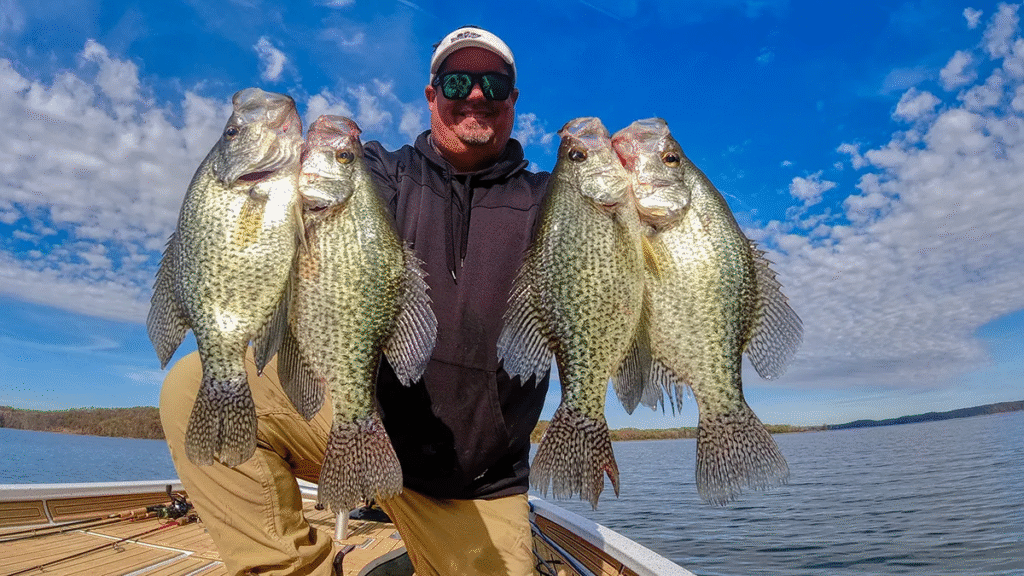
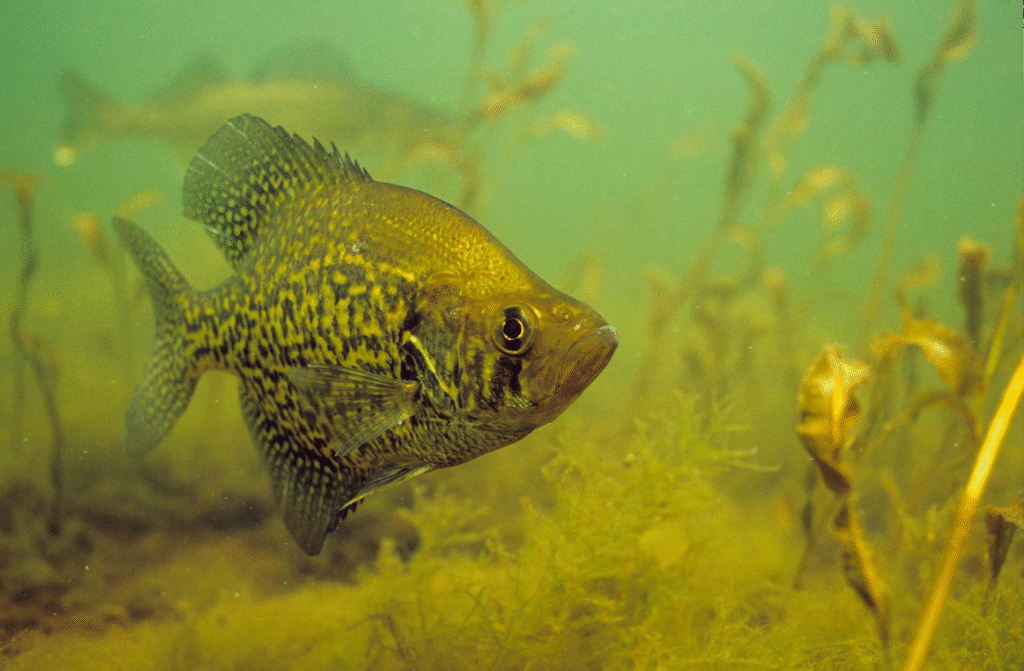
- Black crappie (Pomoxis nigromaculatus): Usually heavier-bodied with a more blotchy, darker pattern. Prefers clearer water and more complex structure (standing timber, brush piles). Often schools in deeper water in summer and near structure year-round.
- White crappie (Pomoxis annularis): Slightly longer and more silvery with vertical bars. Tolerates murkier, more turbid water, often found in current-influenced areas and shallower water in certain lakes/impoundments.
Why the difference matters: habitat preference and schooling behavior differ subtly, so knowing which species your body of water holds helps you pick the right areas and techniques. Both species respond well to jigs and minnows, but black crappie sometimes prefer smaller presentations and clearer-water finesse tactics.
2 — Essential Beginner Gear (Buy once, use forever)
You don’t need expensive gear to catch crappie — but having the right lightweight setup matters. I’ll give a clear recommended kit with budget and upgrade options.
Rods
- Beginner option (best value): 6’6” to 7’0” medium-light spinning rod, fast action. Good balance between casting distance and sensitivity.
- Vertical/boat rod: Short 4’6”–6’0” ultralight or light rod for vertical jigging. These fit between seat legs and make feel and hooksets easier.
- Ice rod (if ice fishing): 24–36 inch short rod.
What to look for: sensitivity (to feel light bites), light backbone for soft hooksets, and a comfortable handle. Crappie fight hard on light gear — feel every tap.
Reels
- Spinning reel (size 1000–2500): Spool smoothness matters more than brand. Get a sealed drag if you fish in silt or salt-spray.
- Baitcasting not necessary for most crappie anglers unless you’re using specialized casting techniques.
Spool size: a 1000–2500 spinning reel spools 4–8 lb test line and is lightweight.
Line
- Monofilament 4–8 lb test is classic and forgiving for beginners.
- Fluorocarbon 4–6 lb is nearly invisible and sinks faster — good when you want your jig to drop quickly.
- Braided line (4–10 lb equivalent with 6–10 lb mono/fluoro leader) is useful for feeling faint bites and for long under-boat presentations, but remember braid is visible in clear water — use a leader.
Recommended: 6 lb fluorocarbon for most dock/boat fishing; 4 lb mono for finesse.

Hooks, Jigs, and Artificial Baits
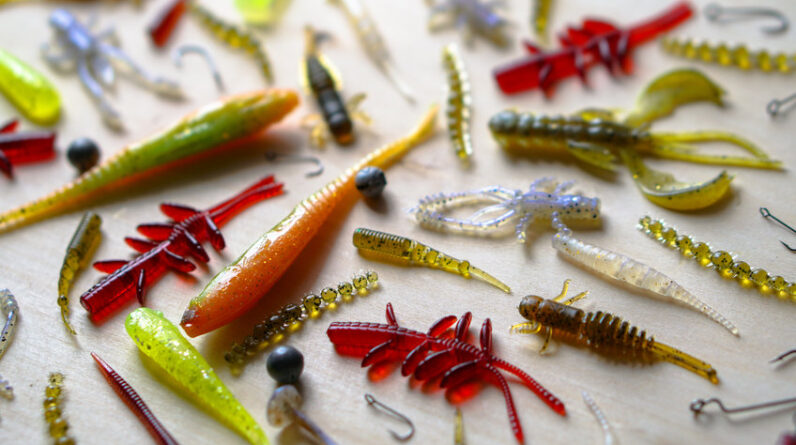
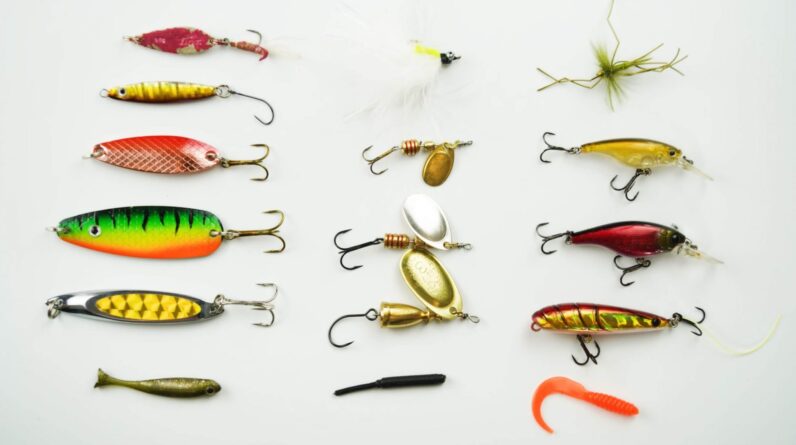
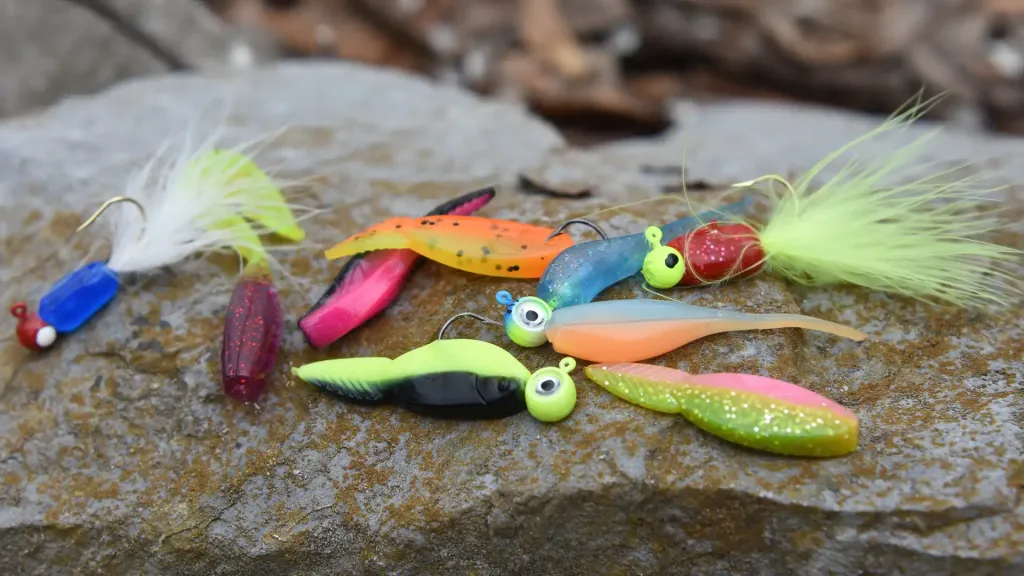
- Marabou jigs (1/64 to 1/16 oz): Classic for crappie; lifelike action.
- Tube jigs (1/16 to 1/8 oz): Excellent for crappie — they imitate minnows and keep a profile.
- Grub jigs (1/64 to 1/8 oz) and curly-tail grubs: Great for casting and vertical jigging.
- Small spoons and soft plastics (minnow imitations): Occasionally very effective.
- Jig head sizes: #6 to #1, weight from 1/64 to 1/8 oz depending on depth and current.
- Live bait: 1–2-inch minnows are extremely effective and often more consistent than artificials for beginners.
Color choices: in clear water, natural colors — white, pearl, chartreuse combinations. In stained water, brighter colors like chartreuse, hot pink, and fluorescent oranges can trigger more strikes.
Bobbers and Slip Bobbers
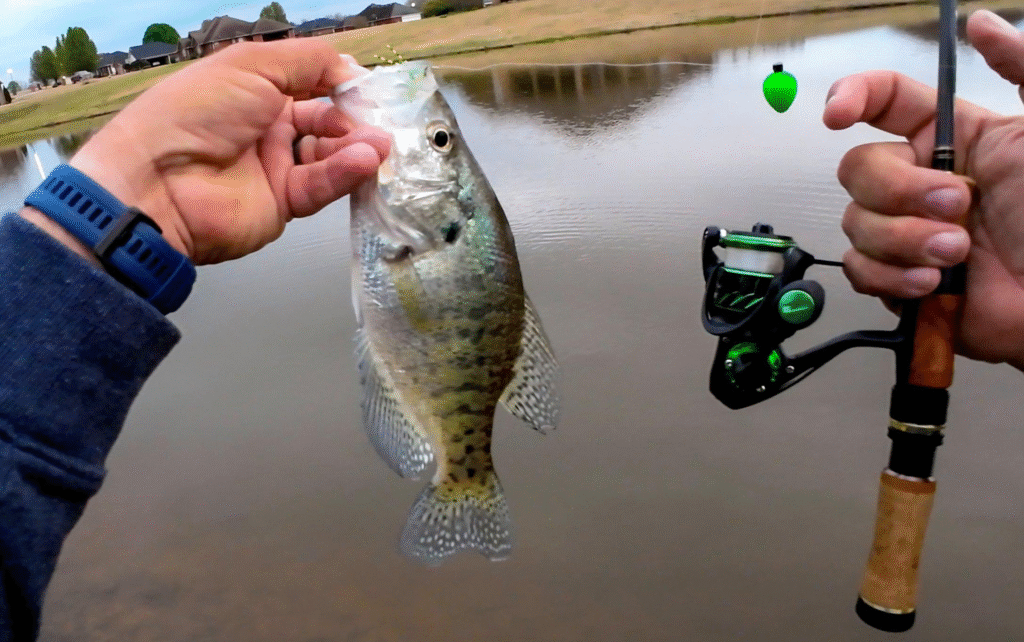
- Slip bobber rigs allow you to suspend a minnow or jig at exact depth over structure — essential for shallow spring fishing and spawning-phase crappie.
- Use light slip bobbers with a spring or stopper system — set them to hover 6 inches to several feet above structure.
Terminal Tackle & Misc
- Split-shot: For controlled sink rate on jigs/minnows.
- Swivels, Snaps, and Beads: Quick-change snaps for jigs + beads to protect knots.
- Needle-nose pliers and net: Pliers for hook removal; landing net with fine mesh to protect crappie.
- Tackle box organization: Small compartments for tiny jigs and hooks help you work fast.
- Bucket with aerator if you use live bait — keeps minnows lively longer.
- Crappie-specific float rigs or a spider rig for trolling from pontoons or larger boats.
Electronics (Fishfinder)
A basic 2D sonar fishfinder is transformative. At minimum, use a unit to locate structural edges, submerged timber, and fish arches or holding marks. Modern CHIRP units show crappie schools and structure with clarity. Fishfinders aren’t required, but they speed up learning.
3 — How Crappie Behavior Changes by Season (and how to fish each)
Crappie behavior is strongly seasonal. Understanding it is the single most important step to catching more fish.
Spring — Spawn & Pre-Spawn (March–May, variable by region)
- Behavior: Crappie move shallow to spawn. They seek protected bays, backwaters, brush near shore, and vertical structure beside shallow flats. Males prepare nests in 1–6 feet of water; fish become highly concentrated.
- Water temps: 55–68°F is typical spawning temperature window.
- Best tactics: Slip bobbers with live minnows or small jigs; very light presentations; focus on shallow cover (docks, laydowns, brush, emergent vegetation). Fish early mornings and late afternoons when fish are active. Use careful approach — spawning fish spook easily.
Early Summer — Post-Spawn Transition (late May–June)
- Behavior: After spawn, crappie move slightly deeper to feed — often along shallow flats near structure, in 6–12 feet.
- Best tactics: Vertical jigging near brush and submerged timber; cast-and-retrieve with tiny jigs; slow presentations in early morning/late evening.
Summer — Deep & Cool (July–August)
- Behavior: Crappie move to deeper water or shaded structure to escape heat and low oxygen; often found around brush piles, submerged timber, drop-offs, or along thermoclines. They may school suspended over deep water (10–25+ feet) near structure or breaklines.
- Best tactics: Use electronics to find schools; vertical jigging or slip-float over brush piles; heavier jigs (1/16–1/8 oz) in deeper water; downsize or add weight as needed. Night fishing around lights and docks can be very productive in summer.
Fall — Active Feeders (September–November)
- Behavior: Crappie feed actively along points, channel edges, and baitfish concentrations as water cools. They may move shallower again, following shad and minnows.
- Best tactics: Cast jigs, crankbaits (small), live minnows on slip bobbers; work points, current breaks, and edges. Fish both shallow and mid-depths depending on baitfish location.
Winter/Ice — Slow but Catchable (December–February)
- Behavior: Cold slows metabolism; crappie move to deeper flats, holes, and submerged structure. Schools can be tight and deep.
- Best tactics: Vertical jigging through the ice (if safe), use small tungsten jigs or small live minnows; slow lifts and pauses; electronics to locate arches. Use scent on jigs and tiny presentations.
4 — Depths: Where to Look at Each Season (Specific depth ranges)
While local variation exists, here are practical depth ranges and structure to search by season. Use these as starting points and adjust with sounder readings.
- Spawn (spring): 1–6 feet along protected shorelines, flats, docks, and brush.
- Early summer: 6–12 feet: flats with adjacent deeper water or isolated structure.
- Mid-summer (hot): 10–25+ feet — around brush piles, deep submerged timber, channel swings, along thermoclines and edges.
- Fall: 5–15 feet — points, creek channel edges, and mid-lake structure where bait congregates.
- Winter: 10–30 feet (depending on lake depth) — deeper holes, submerged brush, flats with cover.
Practical tip: If you find a point in 12 feet that drops to 20 feet, fish the breakline (the edge where depth changes). Crappie often hold just above or adjacent to these edges.
5 — Structure & Habitat: Where Crappie Hide (and why)
Crappie are structure-oriented. They use cover for ambush and protection.
- Submerged timber and standing trees: Classic crappie habitat. Fish the edges and the leaning logs.
- Brush piles and artificial brush: Some lakes have constructed brush — these are magnets for crappie. Vertical presentation directly above brush is key.
- Docks and piers: Provide shade and ambush lanes. Work around pilings and float lines.
- Drop-offs and channel swings: Points where depth changes — crappie patrol these lines for baitfish.
- Coves and backwaters: Especially in spring spawn; protected, shallow zones with warmer water.
- Weed edges and lily pads: Provide cover and feeding zones, especially in spring and early summer.
- Underwater humps and flats adjacent to deeper water: Often productive in post-spawn and fall.

6 — Proven Rigs & Presentations
Here are the most effective setups to start with and when to use them.
Slip Bobber with Live Minnow (Spring & Shallow)
- Why use it: Allows you to suspend a minnow at exact depth over spawning flats and around docks.
- Setup: Slip bobber + 6–12 inch fluorocarbon leader + #6–#4 hook + 1–2” minnow. Use a small split-shot if needed to get bobber action. Set bobber to keep minnow 6–18 inches off bottom or above structure.
Technique: Cast or drop next to structure; watch bobber for subtle twitches and stops. Set hook quickly but with a soft upward sweep.
Vertical Jigging (Summer & Deep Brush)
- Why use it: When fish are suspended over brush piles or timber, vertical jigging puts your lure right in front of them.
- Setup: Short rod (4’6”–6’) + light reel + 4–6 lb line + 1/16–1/8 oz jig or tube jig.
- Technique: Drop to the brush, lift 6–18 inches and let fall; pause and repeat. Vary lift length and speed. If fish are tight to structure, tiny hops often work best.
Spider Rigging (Trolling multiple rods)
- Why use it: Covers broad water horizontally and maintains multiple lines at different depths — commonly used from larger boats/pontoons.
- Setup: Multiple long rods with slip bobbers or planer boards to spread lines; live minnows or jigs. Spread rigs across widths, present at different depths.
- Technique: Best on large reservoirs where crappie are spread or in transition periods.
Cast-and-Retrieve Jigs (Fall & Cool Mornings)
- Why use it: When crappie are feeding on baitfish near points or drop-offs.
- Setup: 6’6”-7’ spinning rod + small jig (tube, grub, marabou) 1/64–1/16 oz.
- Technique: Cast past the target area, retrieve slowly with occasional twitches or small lifts to mimic wounded baitfish.
Slip Float + Jig (Shallow to Mid-depth)
- Why use it: Combines depth control of slip float with possibility of jig action. Good for docks and laydowns.
- Setup: Slip float + leader + small jig. Set depth shallow, and cast into cover. Work with short, subtle lifts.
Ice Jigging (Winter)
- Why use it: Vertical presentation through ice is the most efficient way to find and catch winter crappie.
- Setup: Short ice rod + tungsten or small jigs + 4–6 lb line + electronics. Live minnows or tiny plastics also work.
7 — How to Use Electronics (Fishfinders) for Crappie
Fishfinders shorten the learning curve dramatically.
- Identify structure: Look for woody debris, brush piles, humps, and the channel edge.
- Look for arches and clusters: Crappie often appear as small dots or arches; in CHIRP sonar you may see tight schools suspended above structure.
- Use zoom and split-screen: Zoom in on the depth range you want. Side-imaging helps show docks and brush near shore.
- Mark waypoints: When you find a brush pile, mark it and circle back. Crappie often hold near the same structure.
- Watch movement: In summer, crappie may suspend mid-column. A vertical reading that shows fish marks off the bottom is ideal.
- Water temperature overlay: Many units show temperature — note the thermocline and where fish are relative to it.
Practical sequence: Start a structure sweep on sonar, identify promising marks, slow-drift or anchor above the mark, and then fish vertically through it.
8 — Best Times of Day to Fish Crappie
- Early morning (dawn) & late evening (dusk): Often best in warm months, especially nearshore and around docks.
- Midday in summer: Fish may move deeper and be less active; vertical jigging or electronics-reliant tactics work better.
- Night fishing: Can be excellent in summer around lit docks — crappie feed on baitfish attracted to light.
- Cloudy windy days: Often productive; wind pushes bait to leeward shorelines and points, concentrating crappie.
9 — Top Baits & Colors (and when to use them)
- Live minnows: Most productive overall — especially for beginners and during spawn. Hook minnow through the lips or back for natural movement.
- Marabou jigs (white/chartruese/tan): Great for subtle presentations; marabou pulsates naturally.
- Tube jigs (pearl, white, green pumpkin): Excellent for both vertical and casting.
- Grubs & curly tails: Good in murky water or when fish are actively feeding.
- Tungsten jigs: Denser and smaller profile — get to depth fast; good for deep summer or winter.
- Small spoons and spinnerbaits: Occasionally productive during aggressive feeding periods.
Color rules of thumb: Natural/pearl for clear water; brighter colors (chartreuse, pink) in stained water or low light. Match jig size to local baitfish size.
10 — Boat vs Bank vs Dock Fishing: Strategies
- From boat: Flexibility to move and target brush piles, points, channel swings. Use electronics and vertical jigging. Anchor above structure or drift slowly.
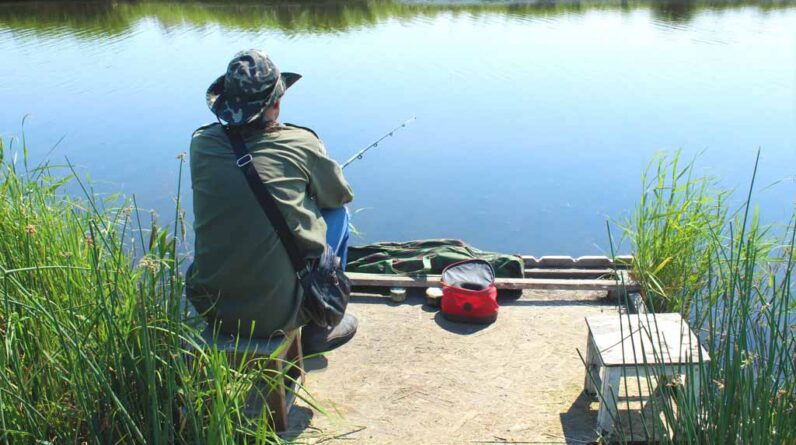
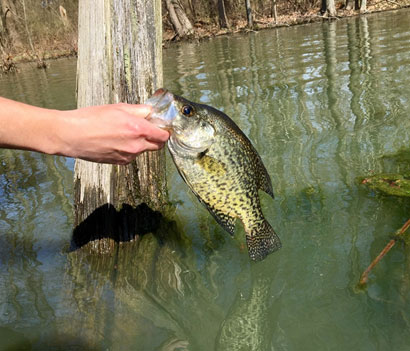
- From shore: Focus on docks, fallen trees, weed edges, and accessible points. Use slip bobber with minnow or cast small jigs along structure.
- From a dock or pier: Fish pilings and underwater shadow lines. Tie off or fish from edge, using light line and quiet presentation to avoid spooking fish.
Beginner tip: If you fish from shore or dock and have access to a canoe or small jon boat, even a short trip across a shallow cove can dramatically increase your catch rate.
11 — How to Handle, Net, and Release Crappie (Ethics & Best Practices)
Crappie are delicate — handle them carefully for their survival.
- Use a fine-mesh rubberized net when possible to reduce slime loss.
- Wet your hands before touching fish. Avoid squeezing; support the belly when holding.
- Use long-nose pliers or hemostats to remove hooks quickly. Barbless hooks or pinching barbs reduces injury.
- If you plan to release, minimize time out of water (under 15–20 seconds).
- For livewell or bucket storage, use aeration to reduce mortality.
- Follow local regulations on size and creel limits.
12 — Common Beginner Mistakes & How to Fix Them
- Using heavy gear: Too heavy a setup reduces sensitivity. Use light rods and smaller jigs.
- Fishing the wrong depth: Rely on sonar or experiment with slip bobber depths. Try multiple depths quickly until you get bites.
- Overlooking structure: Crappie love cover. Learn to identify and fish brush, docks, and timber.
- Using the wrong bait size: Match lure size to local forage; 1–2” minnow and 1/64–1/16 oz jigs are common.
- Moving too fast: Crappie often require a slow, patient presentation. Slow down your retrieve or jig action.
- Not varying presentation: Experiment with lift length, fall speed, and pause durations. Small changes often trigger strikes.
- Neglecting safety: Especially in spring spawn, approach quietly; from a boat, keep engine off near spawning flats.
13 — Where to Find Crappie: Best Spots by Region (Broad examples)
Crappie live across North America, but the exact best spots depend on your region. Here are broad categories and examples to help you choose locations in your area.
- Reservoirs & large impoundments: Many produce trophy crappie — look for old timber, brush piles, and river channel breaks. Examples: [regional names vary; check local lake maps].
- Smaller lakes & oxbows: Often easier for beginners and offer accessible public shorelines, docks, and easy brush.
- Rivers & tailwaters: White crappie can be abundant in current areas near back eddies and slack water.
- Ponds: Often hold abundant crappie — ideal for novice anglers and children.
- Coastal plain lakes and oxbows: Productive in the Southeast.
Practical approach: Use state fish & wildlife websites (check local stocking and regulation info), talk to local bait shops, and check social angler groups for “where crappie are biting” reports. (Note: when planning trips, always check local regulations and seasons.)

14 — Regulations & Conservation (must-dos)
Regulations vary by state/province and water body. Always:
- Check local bag and size limits.
- Confirm spawning protections and closed areas.
- Respect private property and posted signs.
- Use legal hooks and gear as required.
Conservation tips: Don’t take more fish than you’ll eat; practice selective harvest; release smaller fish to grow and sustain the population.
15 — Enticing Presentations: How to Trigger Reluctant Fish
Small changes can unlock inactive crappie. Try these:
- Add a gentle twich or pull after a pause — many strikes come on the fall.
- Slow your jig fall by half a second and let it sit; subtle movements often trigger a strike.
- Change color or size if no reaction after several presentations.
- Use scent or alive bait when fish are slow — basil or garlic scents on jigs sometimes increase hits.
- Bump structure lightly (with your lure) — an imperceptible collision can trigger reaction strikes.
16 — Night Fishing for Crappie
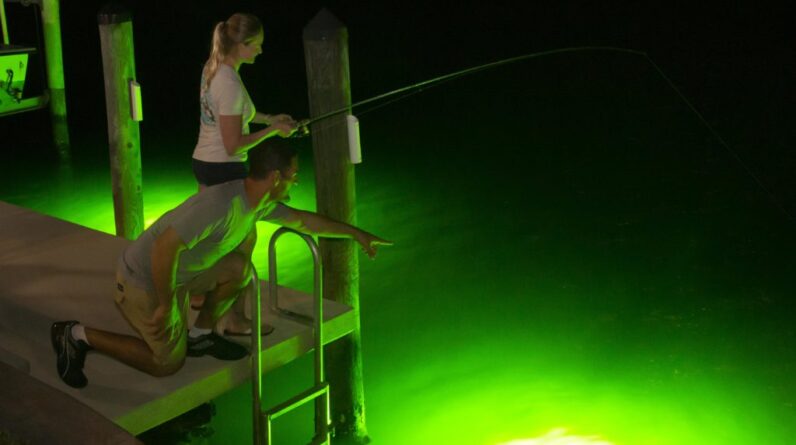
Night fishing, especially in summer, can produce huge catches under lights or around docks. Baitfish concentrate near lights, which draws crappie.
- Where: Lighted docks, marinas, shoreline lights, bridge pilings.
- Tactics: Live minnows and small jigs near lighted areas. Use a glow jig or chartreuse in stained water.
- Safety: Be extra cautious boating at night — use navigation lights and have life jackets ready.
17 — Ice Fishing for Crappie (Safety and Tactics)
When lakes freeze, crappie move to deeper holes and structure. Ice fishing requires caution.
- Ice safety: Follow local ice-thickness guidelines (generally 4” for foot traffic, more for vehicles). Wear a floatation suit and carry ice picks.
- Tactics: Small tungsten jigs or ice-specific jigs tipped with a minnow. Slow jigging is effective. Use a flasher or fishfinder to find suspended schools.
- Depth: Often 12–30 feet depending on the lake; use electronics to fine-tune.
18 — Cleaning and Cooking Crappie (simple and delicious)
Crappie fillet easily and are excellent pan-fried, baked, or grilled.
Basic pan-fry:
- Rinse and pat dry fillets.
- Season with salt and pepper, dredge in seasoned flour or cornmeal (add paprika, garlic powder).
- Heat oil (not smoking) in a skillet, fry 2–4 minutes per side until golden.
- Serve with lemon and tartar sauce.
Storage: Keep fish cool and use within 24–48 hours for best quality; freeze if storing longer.
19 — Advanced Tips for Faster Improvement
- Log your trips: Depth, water temp, bait, and structure — learning accelerates when you review success patterns.
- Use a waypoint system: Mark brush piles and productive points. Revisit and double-check across seasons.
- Network with local anglers: Bait shops and fishing groups can give instant local intel.
- Learn to tie a few knots well: Improved knot strength = fewer lost fish. (Palomar knot and improved clinch knot are essential.)
- Practice cast control: Cast quietly and accurately near structure to avoid spooking fish.
20 — Example Day Plans for Beginners (3 scenarios)
Concrete plans help beginners convert effort into bites.
Plan A — Spring Shore/Dock Trip (2–4 hours)
- Gear: 6’6” rod, 6 lb fluorocarbon, slip bobber, small minnow, marabou jig backup.
- Location: Protected cove with docks and brush.
- Strategy: Arrive at first light, set slip bobber 1–2 feet off bottom around docks and brush. Alternate 30-minute minnow sessions with slow jig work. Move to another dock every 30–40 minutes if no action.
B — Summer Boat Trip (6 hours)
- Gear: Short vertical rod, 6’6” casting rod, fishfinder, assortment of 1/16–1/8 oz jigs, livewell.
- Location: Find brush piles and deep timber with sonar.
- Strategy: Slow drift or anchor above brush pile. Vertical jig for 30–40 minutes per pile. When you find a school, fish it thoroughly and mark it.
C — Fall Point/Channel Edge (3–5 hours)
- Gear: Light spinning rod, small tube jigs, small spoons, 6 lb mono.
- Location: Points and channel edges with baitfish schools.
- Strategy: Cast-and-retrieve along edges. Use longer casts and slow retrieves. Try both top-half of the water column and just off-bottom.
21 — Recommended Beginner Shopping List (compact)
- 6’6”–7’ medium-light spinning rod.
- 1000–2500 spinning reel (smooth drag).
- 6 lb fluorocarbon + spool of 4 lb mono.
- Tubes (2”), marabou jigs, grub jigs (various sizes 1/64–1/8 oz).
- Assorted small hooks (#6–#1).
- Slip bobbers, split-shot.
- Bucket/aerator for live bait.
- Landing net, needle-nose pliers, small fillet knife.
- Fishfinder (entry-level CHIRP unit recommended).
- Life jackets and basic safety kit.
Frequently Asked Questions (FAQ) — Add these as FAQ schema on the page
Q1: What’s the best gear for a beginner crappie angler?
A: A 6’6”–7’ medium-light spinning rod, 1000–2500 spinning reel, 4–6 lb line, small jigs (1/64–1/16 oz) and live minnows. Add a fishfinder if you boat.
Q2: Where do crappie go in the summer?
A: In hot weather crappie move to deeper water or shaded structure — brush piles, submerged timber, and along thermoclines in 10–25+ feet.
Q3: When is crappie spawn and how do I fish it?
A: Spawn timing varies by region (often spring when water hits ~55–68°F). Fish shallow near brush and docks with slip bobbers and live minnows, keeping noise to a minimum.
Q4: Which is better: live minnows or jigs?
A: Both work. Live minnows are often more consistent, especially for beginners. Jigs offer versatility and success year-round, especially when fished well.
Q5: Can you crappie fish from shore?
A: Yes — target docks, laydowns, points, and weed edges with slip bobbers or small jigs.
Q6: How do I tell black crappie from white crappie?
A: Black crappie have blotchy dark spots and a deeper body; white crappie are more silver with vertical bars. Behavior and habitat preferences differ slightly.
Troubleshooting: If you’re not catching anything
- Change depth quickly, fishing 1–2 feet shallower or deeper than your current setting.
- Try live minnows if artificials fail.
- Move to a new piece of structure or another cove — crappie can be localized.
- Slow down your presentation — long pauses and small lifts often coax strikes.
- Switch colors and sizes — subtle changes matter.
Hooks, Knots, and Small Details Every Beginner Should Know
- Knots: Learn the improved clinch knot and Palomar knot — both reliable for light lines.
- Hook choice: Use smaller hooks (#6–#1) to match mouth size. Size down when the bites are soft.
- Barbless hooks or pinch the barb: Easier releases and less damage to fish.
- Leader length: A 6–12 inch fluorocarbon leader reduces visibility for spooked fish.
Sample 30-Day Practice Plan for Rapid Learning
Week 1: Learn gear and basic knots; practice casting and setting depths with slip bobber; target a local pond.
2: Fish during pre-dawn and dusk; experiment with jigs and minnows around docks.
3: If possible, use a boat or join an experienced angler; practice vertical jigging on brush.
4: Review logs, refine presentation, and practice using fishfinder to locate structure and schools.
Safety & Boating Etiquette
- Always wear a life jacket.
- Keep a charged phone and a VHF or NOAA radio if on large lakes.
- Anchor or drift considerately near other boats; give space to anglers on brush piles.
- Respect posted no-wake or no-fishing zones.
Sample Local Resources & Next Steps
- State fish and wildlife websites for regulations and stocking reports.
- Local bait shops for current bite reports and live bait.
- Online fishing forums and regional Facebook groups for day-to-day intel.
- YouTube channels focused on crappie fishing for visual technique reinforcement.
Closing Notes & Encouragement
Crappie fishing is immensely rewarding because the learning curve rewards patience and observation. You can have productive outings with modest gear if you focus on structure, depth, and seasonality. Use electronics when you can, but don’t undervalue simple tools like a slip bobber and a live minnow. Keep a fishing log, make small adjustments in presentation, and stay curious — crappie will reward the angler who pays attention.
Tight lines!